

- 博客访问:1648
- 博文数量: 304
- 用 户 组: 普通用户
- 注册时间:2026-08-26
- 认证徽章:
个人简介
丘比特的圈套





推荐博文
悠长假期
2026-08-26
分类: 黄飞鸿
悠长假期
一些三星用户表示,Facebook无法删除,只能被禁用。_我的网站

一 |
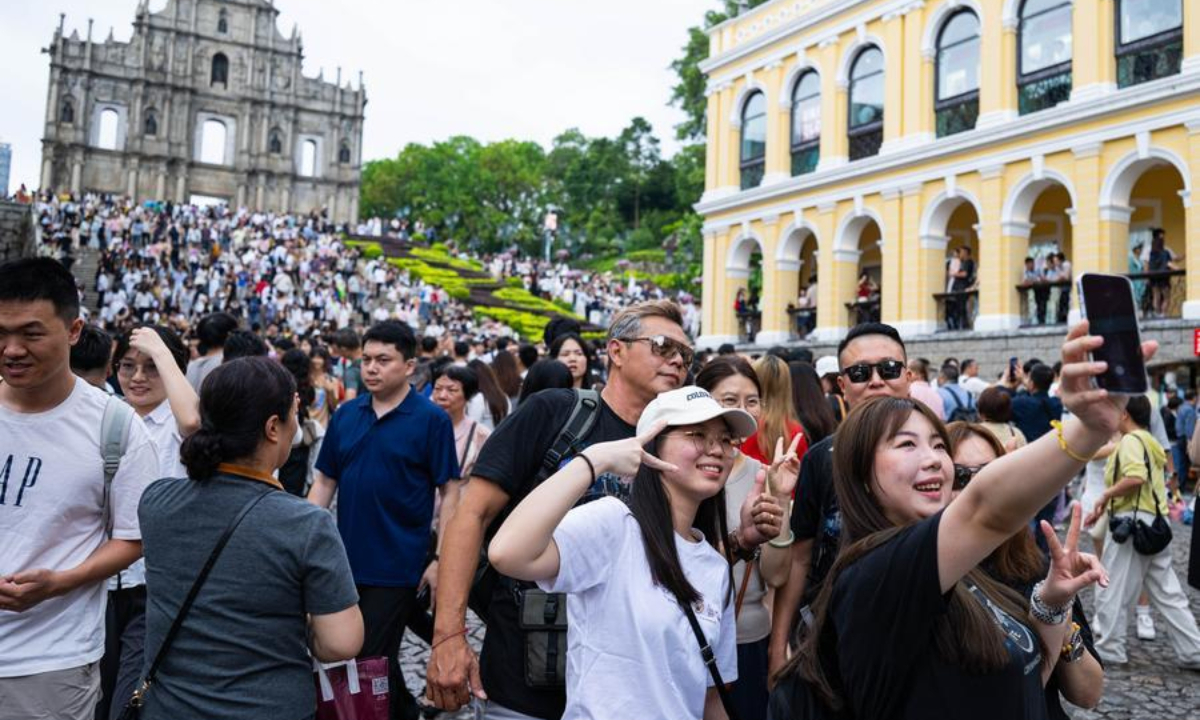
Macao and its neighbor Hong Kong are China's two special administrative regions (SARs) governed under the "one country, two systems" policy. This arrangement, in place since China resumed the exercise of sovereignty over the two cities in the late 1990s, allows them to maintain their capitalist systems and ways of life within socialist China.
The third five-year plan of the Macao SAR, unveiled on Tuesday, sets out policy priorities for the next stage, focusing on economic diversification, social progress, and closer integration into national development, while ensuring security.
Since its return to China in 1999, Macao has evolved from a city once associated largely with casinos and gangster films into a vibrant international hub with a dynamic economy, a low crime rate and an increasingly comprehensive social welfare system. It now ranks among the world's wealthiest economies in terms of GDP per capita.
With the plan, the SAR government is proactively positioning Macao within the broader context of national development and actively implementing the relevant arrangements of the country's 15th Five-Year Plan (2026-2030), said Macao SAR Chief Executive Sam Hou Fai.
ECONOMIC DIVERSIFICATION
Economic diversification has remained a central theme throughout Macao's three five-year plans, from the first plan unveiled in 2016 to the latest one.
Sam said economic diversification is essential to sustaining Macao's long-term prosperity and stability and is a task the SAR government must tackle, no matter how difficult it may be.
According to Sam, the Macao SAR government will advance economic diversification through major projects and a government guidance fund to build Macao into a world tourism and leisure center and develop its priority industries, namely, big health, modern finance, high technology, exhibition and convention, as well as culture and sports.
The plan sets the target of raising the share of value added from non-gaming industries to around 60 percent of Macao's GDP by 2030.
Cheong Chok Man, director of the Policy Research and Regional Development Bureau under the Macao SAR government, said that setting such a target means Macao will need to intensify its efforts to achieve greater economic diversification.
Major projects aimed at promoting economic diversification during the period are expected to involve around 130 billion patacas (about 16.1 billion U.S. dollars) in budgeted investment.
For a small economy like Macao with a GDP of roughly 50 billion U.S. dollars in 2025, the investment represents a significant commitment, said Lao Chi Ngai, president of the Macao Economic Association.
BROADER INTEGRATION
The plan is designed to advance the high-quality development of the Guangdong-Macao In-Depth Cooperation Zone in Hengqin.
Located in Zhuhai, Guangdong Province, Hengqin is separated from Macao by a narrow stretch of water. The cooperation zone was established in 2021 to create new space for Macao's development.
This year marks a crucial period for the zone's second phase of development. The latest five-year plan calls for addressing challenges through reform and advancing deeper integration between Macao and Hengqin, with science and technology and education serving as key drivers.
The plan sets quantitative targets in areas including industrial diversification, cross-border flows of production factors, and the integrated provision and sharing of public services.
Richard W. Hu, dean of the Faculty of Social Sciences at the University of Macau, said the plan moves beyond integration in individual industries toward broader integration encompassing industries, people's livelihoods, talent and governance.
Hengqin is expected to develop into an integrated urban area that serves as an extension of Macao's industries and a vibrant cross-border community. In doing so, it could offer a landmark example of leveraging the institutional strengths of "one country, two systems" to foster closer regional synergy, Hu said.
SECURITY AS FOUNDATION
Alongside economic diversification and regional integration, the latest plan places security among its major priorities.
"Amid a complex and evolving international landscape, Macao faces potential challenges arising from a combination of traditional and non-traditional security risks," said Yin Yifen, director of the Social, Economic and Public Policy Research Center at Macao Polytechnic University.
He said the plan seeks to improve the legal framework and enforcement mechanisms for safeguarding national security, strengthen security governance in emerging areas such as cyberspace, data and artificial intelligence, and further develop smart policing.
It also places emphasis on national security education for young people.
"Making security an integral part of governance in the SAR will help lay a stronger foundation for economic diversification, improved livelihood and deeper integration between Macao and the mainland," Yin said.
。中新网1月9日电据彭博社报道,部分三星手机用户发现自己预装的Facebook应用程序无法删除,只能“禁用”,这激怒了部分三星用户。Nick Winke是一名摄影师,他使用了三星于2017年推出的Galaxy S8,并在购买手机时预装了Facebook应用程序。后来,他想删除应用程序,但无法删除。

二 | 唯一的选择是“禁用”。他不明白“残疾”的含义。作为回应,Facebook的一位发言人说,“禁止”应用程序实际上和删除它差不多。一旦用户选择禁用它,应用程序将不会继续收集数据或向Facebook发送信息。Facebook还表示,删除应用程序是由预先安装的协议决定的,该协议是Facebook多年来与手机制造商、操作系统和移动运营商签订的,三星是其合作伙伴之一。Facebook不愿透露该协议的财务细节,称该公司希望用户在获得新手机后立即获得最佳体验。Facebook也拒绝透露合作过预装应用程序的公司,只说合作协议因地区和类型而异。三星表示,一些预先安装的Facebook应用程序可能会被禁用,一旦禁用,该应用程序将无法继续运行。由于互联网上没有与Facebook应用程序相关的预装移动电话的完整列表,消费者不可能知道某个设备是否预装了Facebook,因此他们只能在购买移动电话时请求客户服务。

三 |
Current article:http://dy69.chaochangkuanbandangyogeseng.sbs/news/20260826_135044.htm
Published on:16:56:22
相关热门文章
- 走在乡间小路上丨这里有个“围裙村”
- China embraces summer inbound travel craze with niche draws, fresh moves
- 预扣款10.5万起 推3款车型 海豹06 DM-i旅行版到店 预计7月初上市
- 国家统计局:消费稳步扩大对于经济稳定增长发挥重要作用
- 传言称NVIDIA放弃TITAN "Ada Lovelace" 转而筹备GeForce RTX 4090 Ti


